
Researcher of the Month, November 2025: Emmanuel Erhijodo
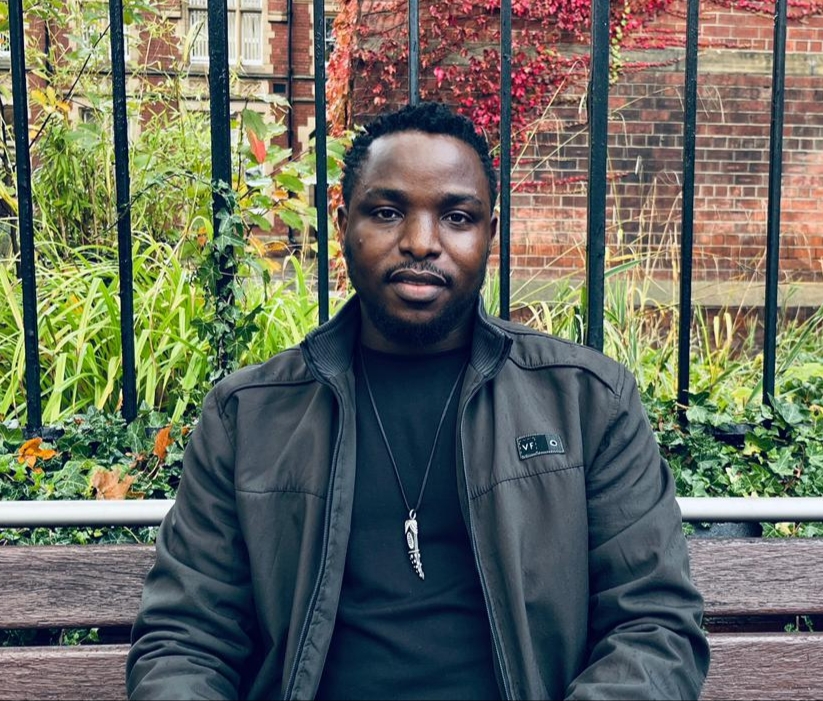
Emmanuel Edafe Erhijodo is a postgraduate researcher in the School of Philosophy, Religion and History of Science, University of Leeds. Emmanuel is funded by a full UKRI (UK Research and Innovation/Arts and Humanities Research Council) scholarship and is a member of CRPL. The provisional title of Emmanuel's PhD research project is, "Eco-Spiritual Trauma and Ecological Justice: A Literary and Ethnographic Study of Ecospirituality in Niger Delta Poetry."
Tell us a little about your research journey. How did you get to where you are right now?
My research journey began at Ebonyi State University and the University of Ibadan in Nigeria, where I earned my Bachelor’s and Master’s degrees in Literature. My research has always centred on cultural tropes in African literature and is immersed in indigenous religious practices. In my BA project, I investigated death motifs in African literature with a specific focus on selected drama texts by two pioneering African playwrights, Wole Soyinka and Ola Rotimi. In that project, I explored the differences between ritual death and suicide within the Yoruba religious and cultural context. For my MA thesis, I examined postmodernist traditions in African prose fiction, analysing the novels of Igoni Barrett and Fiston Mujila, while also exploring postmodernist aesthetics within the African context. Having utilised drama and prose genres in my previous research, I decided to be innovative in my PhD research at the University of Leeds, by adopting a mixed-method approach combining poetry and ethnography. As part of my research, I am conducting a field investigation and poetic textual analyses using empirical data gathered from ethnography. My thesis focuses on a literary and ethnographic study of eco-spirituality in Niger Delta poetry.
What are you currently working on?
Having recently returned from a primary research trip to the creeks of the Niger Delta, where I undertook a three-month poetic ethnographic visit to examine the effects of oil pollution on religiously sacred grounds and temples in the area, I am at present in the writing phase of my thesis, which explores eco-spiritual trauma in Niger Delta poetry. I used poetry as a guide to identify and locate five communities heavily impacted by oil spillage and gas flaring, and to examine how their indigenous religious sacred sites are affected by pollution. My research investigates the eco-spiritual trauma experienced by the Niger Delta people, who have suffered the long-term consequences of oil pollution for decades. Particular attention is given to understanding how ecological trauma concurrently causes spiritual trauma in these communities.
Focusing on Niger Delta ecological poetry and the religious, cultural, and social contexts from which the genre has emerged, my project employs literary analysis, ethnographic observation, and reader-response research to explore the connection between environmental degradation and the desecration of indigenous religious lifeworld in the region. My approach decentres the poets and their intentions in the texts, and gives agency to the local readers and their interpretations and responses to the poems. These readers are members of the affected communities, who bring their indigenous religious knowledge, their experiences of community life before and during the pollution, and insights into how the pollution has influenced their religious beliefs and practices. They engage with the poems through focus group discussions and individual interviews, which I used to gather community responses to issues related to pollution, spirituality, and trauma depicted in the literature. In doing so, I aim to democratise Niger Delta poetry and to foster greater understanding of eco-spiritual trauma.
How does your work relate to some aspect of religion and public life?
Religion has always been central to my research. While examining the impact of oil pollution on indigenous religious lifeworlds, my work recognises the cosmopolitan nature of the Niger Delta, which has enabled several religions, including Christianity and Islam, to coexist harmoniously. An early observation during my ethnographic trip to the creeks was how the religious diversity in the communities shaped practically every aspect of life, fostering some form of syncretism necessary in a pluralistic region like the Niger Delta. My research explores how oil pollution has constantly disrupted not only the socio-cultural life of the people but also the spiritual fabric crucial for sustaining communal bonds. It also investigates how indigenous religious rituals and Christian practices are being adapted to the realities of the environmental crisis affecting the region.
Furthermore, my work highlights that the oil pollution devastating coastal communities is not merely an economic crisis but also a moral and deeply spiritual one. As an interdisciplinary project intersecting several fields including African ecocriticism, religion, ecology, and literature, my work foregrounds the eco-spiritual implications of the ongoing degradation of the Niger Delta natural environment through oil spills and gas flaring. It also amplifies community voices by highlighting how local poets and worshippers respond to and engage in ecological advocacy amidst the ongoing environmental emergency.