
Researcher of the Month, June 2025: Zaynab Ango
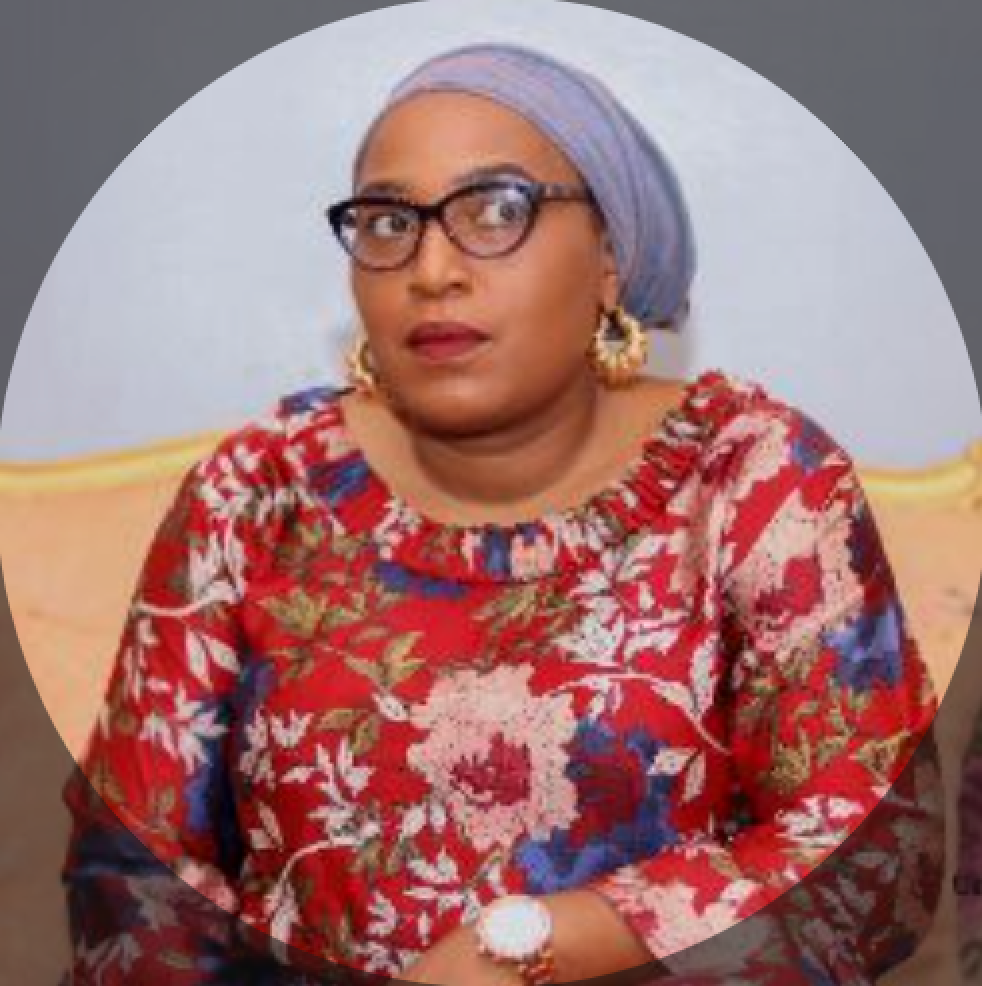
Zaynab Ango is a Visiting Research Fellow at the University of Leeds School of Philosophy, Religion and History of Science, where she is working on the Project “The Return of the Repressed: Sexuality Discourse in Hausa Digital Prose Fiction,” under a British Academy International Visiting Fellowship award. Zaynab holds a PhD in Literary Studies and teaches at the Department of English and Literary Studies, University of Abuja, Nigeria.
Tell us a little about your research journey - how did you get to where you are now?
My research journey started from my postgraduate studies at Bayero University Kano and Ahmadu Bello University Zaria in Nigeria. My background is in Literature. My Masters and PhD research are on environmental literature. However, after completing my PhD, my research interest shifted to Post-colonial Cultural Studies, focusing on gender and sexuality issues in post-colonial northern Nigeria. That is where I am right now.
What are you currently, or about to start, working on?
My current research project is a transdisciplinary study of sexuality in Hausa culture and literature. It draws theoretical insights from concepts in Literary Studies, Quranic Hermeneutics, Digital Media Studies, and Queer African Studies. There is a general stereotype of African cultures as being conservative on matters of sexuality. This stereotype is particularly associated with Hausa culture in northern Nigeria, which for centuries has been shaped by Islamic traditions. Yet, this representation is problematic and needs nuancing. My project examines the creative depiction of diverse sexual orientations in contemporary digital Hausa literature. It contends that digital publishing challenges the conservative thrust of mainstream Hausa literature, which has been subject to religious censorship. It argues that online media allow for new forms of self-assertion and self-affirmation that challenge traditional religio-cultural norms and values. Through a detailed analysis of the form and content of online Hausa prose fiction, the project shows that Hausa literature and culture are much more diverse than often is acknowledged, and it reveals online publishing platforms as liberating spaces and archives for non-normative literature.
In what way(s) do you feel your research examines the role of religion in public life and the relationship between the two?
Religion is fundamental to public life in northern Nigeria, which is the setting of my work. Islam, which happens to be the predominant religion of the people, is not just a belief system: it is a complete way of life. Islamic doctrines regulate and govern people’s life and livelihoods, from the mundane to the most profound existential issues, such as sexuality, which my current project addresses. Beyond this, religion is also an identity marker through which individuals become knowing subjects. You know, identity and subjectivity are closely connected, if not contingent. While subjectivity can be explained as the condition of being a person, as well as the process by which we become knowing subjects, identity can be said to be some set of assumptions that we hold about ourselves as persons, and the expectations of others about us. So, the fact that Islam determines our identity means that it also determines our subjectivity. This shows how profound religion is in our public lives. And, this is what my research aims to show, concerning sexuality and agency in Hausa literary and cultural expressions.